TL;DR — Quick Answer
Clean a commercial ice cream machine daily, deep-clean weekly and inspect monthly. Skipping the daily cycle is the single biggest cause of texture problems and failed health inspections.
- Daily: drain leftover mix, rinse hoppers in warm water, run a manufacturer-approved sanitiser through the freezing cylinder, disassemble and wash removable parts, dry everything before reassembly.
- Weekly: inspect O-rings and seals for cracking, lubricate moving parts with food-grade lubricant, clean condenser filters.
- Monthly: check refrigerant pressure and compressor temperature, verify hopper and cylinder temperatures with a calibrated thermometer, book service if you hear unusual noise or see longer freeze times.
- Sanitiser: use a food-contact sanitiser labelled for frozen-dessert equipment — chlorine- or quat-based, diluted to the manufacturer’s ratio. Never full-strength household bleach.
- Dishwasher warning: only parts the manufacturer marks dishwasher-safe. Many seals and O-rings warp in high heat.
- Sour smell? Dairy residue is fermenting. Disassemble, soak seals in sanitiser and run a cleaning cycle; if it returns, check the door gasket.
Regular cleaning and maintenance extend the life of your machine, protect food safety, and keep product texture consistent. Follow a daily, weekly, and monthly schedule.
Daily Cleaning
- Drain remaining mix and rinse hoppers with warm water.
- Run a manufacturer-approved sanitizer through the freezing cylinder.
- Disassemble and wash removable parts (hoppers, taps, O-rings).
- Dry all parts thoroughly before reassembly.
Weekly Tasks
- Inspect O-rings and seals for wear or cracking.
- Lubricate moving parts with food-grade lubricant.
- Clean condenser filters to maintain airflow and cooling efficiency.
Monthly Checks
- Check refrigerant pressure and compressor temperature.
- Verify hopper and cylinder temperatures with a calibrated thermometer.
- Schedule professional service if you notice unusual noise or long freeze times.
Always refer to your model's manual for exact procedures. Replacement parts and service guides are available from our support team.
Frequently Asked Questions
How often should I clean a commercial soft serve machine?
Run the auto-clean cycle every day the machine is in use, plus a deeper sanitizing wash at least once a week. Lubricate door gaskets and seals with food-grade lubricant weekly and inspect wear parts monthly.
What is the best sanitizer for ice cream equipment?
Use a food-contact sanitizer labeled for frozen-dessert equipment, typically a chlorine- or quaternary-ammonium-based product diluted to the manufacturer's ratio. Avoid household bleach at full strength and never mix sanitizers.
Can I run the auto-clean cycle with dish soap?
Only use cleaners approved by the machine manufacturer in the auto-clean cycle. Dish soap can leave residue that affects flavor and creates foam that damages the beater. Axospro machines come with a recommended cleaning protocol in the manual.
How do I prevent bacteria in the mix hopper?
Keep the hopper temperature at or below 4 C (40 F), refill with fresh mix rather than topping off old mix, and empty and sanitize the hopper at least every 72 hours. A mix-level sensor and a covered hopper lid help maintain cold chain.
Daily, weekly and monthly cleaning checklist
| Frequency | Task | Why it matters |
|---|---|---|
| Daily | Empty hoppers, wipe dispensing heads, sanitize drip tray, run a rinse cycle | Prevents bacterial growth and sour odour |
| Weekly | Remove and soak seals, O-rings and gaskets; deep clean cylinders | Stops hidden dairy build-up that shortens part life |
| Monthly | Inspect condenser coil, check belt tension, test thermostat | Keeps cooling efficient and avoids surprise breakdowns |
Common cleaning mistakes that shorten machine life
The biggest mistake is skipping daily cleaning because service looks fine. Dairy residue ferments fast in warm hoppers and attacks rubber seals. A second mistake is using chlorine bleach, which corrodes stainless steel and food-grade parts. A third is reusing worn seals instead of replacing them; a $5 O-ring that fails can leak mix into the motor housing and cause a $400 repair. Build a simple logbook so cleaning is never forgotten during busy weeks.
When to call for service
Call a technician when you see frost outside the cylinder, hear grinding from the compressor, or notice output dropping without a recipe change. These signs usually mean a failing compressor, low refrigerant or a worn gear motor. Early service costs far less than a full breakdown during peak season. Keep your model number and purchase date handy so the supplier can ship the right spare part quickly.
Spare parts worth keeping on hand
- Door gaskets and hopper O-rings (fail most often)
- Dispensing tap seals and washers
- Food-grade lubricant for gears
- A spare drip tray and auger bushing
- Sanitizer and a soft-bristle brush set
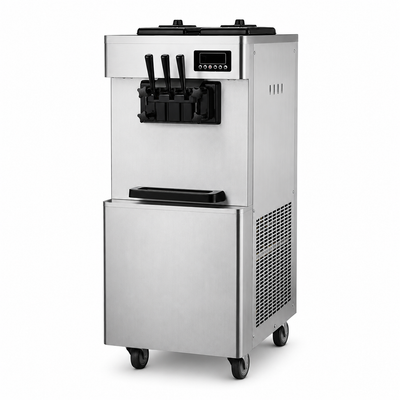
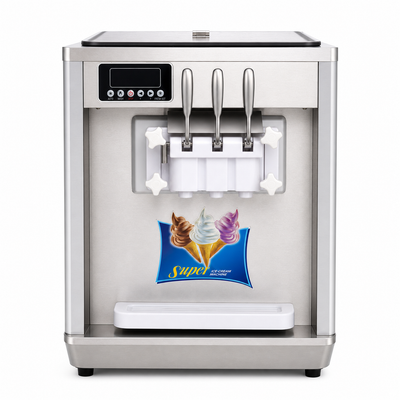
Axospro stocks these parts for every model and ships them with English installation notes, so a small on-site kit keeps downtime under an hour. For most small cafes and food trucks, a countertop soft serve machine such as the Axospro BQL-808-1 is the right starting point, while busy parlours benefit from a floor-standing Axospro BQL-A22-1 with easier daily access to cylinders.
Signs your machine is healthy
A healthy machine holds product at a steady temperature, dispenses smoothly without ice crystals, and stays quiet except for the compressor hum. The dispensing head should look clean with no crusted mix. If product flows unevenly or tastes off, treat it as a cleaning or calibration issue before assuming a parts failure. A five-minute daily visual check catches most problems early and avoids costly emergency service calls.
Frequently asked questions
How often should I clean a commercial ice cream machine?
Daily cleaning of hoppers and dispensing parts is mandatory for food safety. A full teardown of cylinders and seals is recommended weekly, and a deep service every three months keeps the compressor healthy.
What cleaner should I use?
Use a food-grade, non-chlorine sanitizer approved for dairy equipment. Avoid abrasive pads that scratch stainless steel. Rinse thoroughly so no residue reaches the product.
Why does my machine smell sour?
A sour smell means dairy residue is fermenting in a hopper, seal or drip tray. Disassemble, soak seals in sanitizer, and run a cleaning cycle. If the smell returns quickly, check the door gasket and hopper lid.
Can I put parts in a dishwasher?
Only parts the manufacturer marks as dishwasher-safe. Many seals, O-rings and plastic components warp or crack in high heat. Hand-wash food-contact parts in warm sanitizer instead.