TL;DR — Quick Answer
Slush is a high-margin, low-cost-per-serving product, and a slush machine is one of the cheaper machines to install because it is filled by hand rather than plumbed. Profit depends on volume, and the mix ratio matters more than most operators expect: too little sugar and the bowl freezes solid.
- Margin: high per cup, small in dollars — volume decides the total
- Payback: machine price ÷ (servings per day × margin per serving)
- The sugar rule: sugar controls the freezing point; follow the supplier ratio or the bowl freezes solid
- Installation: no water line and no floor drain required
Why slush has such strong unit economics
A slush drink is diluted syrup, frozen to a drinkable texture. The cost of the syrup and cup in a single serving is a small fraction of what customers pay, which is why the category is a standard add-on in convenience stores, cinemas, petrol stations, cafés and takeaway shops.
The trade-off is that the ticket is small too. You are not going to fund a business on a handful of cups a day — you need throughput. That makes site selection more important than machine selection.
Cost per serving
Three inputs: the syrup dose and its cost, the cup, lid and straw, and the electricity for the time the machine is running. Water is effectively free at these volumes.
The honest way to get your number is to cost one full batch of syrup as you actually mix it, then divide by the servings you get from it. Published figures from other operators are rarely comparable, because dilution ratios and cup sizes differ.
Worked example — two-bowl countertop machine
Illustrative figures to show the method. Use your own prices and volumes.
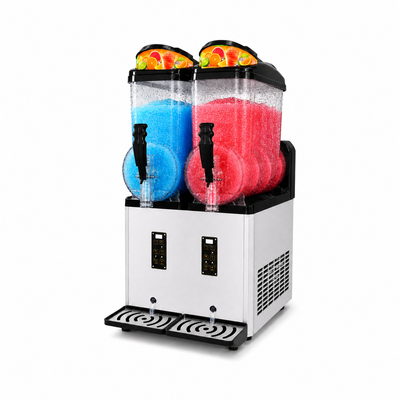
| Machine (G10L2, two bowls, listed price) | $1,205 |
| Bowl capacity | 30 L total across two bowls |
| Servings per day (example) | 50 |
| Contribution per serving (example) | $2.00 |
| Daily contribution (example) | $100 |
| Days to pay back the machine | about 12 trading days |
The sugar rule — the mistake that costs the most
Sugar is not just flavour in a slush machine, it is antifreeze. It lowers the freezing point of the mix, which is what lets the drink stay slushy instead of turning into a solid block of ice.
Get the ratio wrong in either direction and you pay for it: too little sugar and the bowl freezes solid, which can stall the auger and strain the motor; too much and it never sets and you are selling a cold sweet drink instead of a slush. Use the dilution your syrup supplier specifies, measure it, and do not adjust by eye.
Two bowls or three?
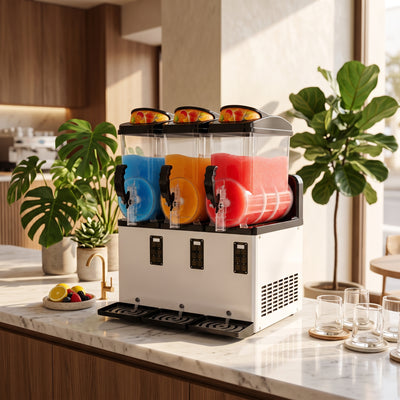
Buy on flavour count and counter space, in that order. Three bowls give you three flavours and more total capacity, but a bigger footprint and more to clean. If you want to run one slush alongside a still or chilled drink, look for independently controlled bowls rather than a single shared setting — that is the difference between offering a range and offering one product three times.
Running costs and cleaning
Cleaning between flavour changes is the hidden cost of slush. Draining, rinsing and refilling a bowl takes time, and it is why some operators run fewer flavours than their machine can hold. Cleaning is not optional: sugar residue left in a bowl is both a hygiene problem and a magnet for the next batch to crystallise around.
Installation: cheaper than you would think
Slush machines are filled by hand. No water line, no floor drain, no drain pump — just a level counter, adequate clearance, and the right electrical supply. AXOSPRO slush machines are configured for North American electrical service: 110 V / 60 Hz with a NEMA plug, with 220 V / 50-60 Hz available on request.
Related reading
- Commercial slush machine buying guide
- G10L2 two-bowl slush machine
- G10L3 three-bowl machine with independent bowls
- Shop slush machines
Frequently asked questions
How much profit is in a slush drink?
Slush is one of the highest-margin items in frozen drinks because the syrup and water cost per serving is low relative to the price customers pay. The margin per cup is real, but it is small in dollars, so total profit depends on volume. Work it out from your own syrup cost and your own selling price rather than using a rule of thumb.
How long does a slush machine take to pay for itself?
Divide the machine price by your daily contribution. A two-bowl G10L2 at its listed price of $1,205 pays back quickly at high-volume sites and slowly at low-volume ones — the formula is machine price divided by servings per day times margin per serving. Plug in your own volume rather than trusting anyone else's example.
Why does sugar content matter so much in a slush machine?
Sugar lowers the freezing point of the mix. Too little sugar and the mixture freezes into a solid block instead of a drinkable slush, which can stall or strain the machine. Too much and it never sets properly. Follow the ratio your syrup supplier specifies and do not improvise the dilution.
Should I buy a two-bowl or a three-bowl machine?
Buy by how many flavours you need to offer at once and how much counter space you have. More bowls means more choice and more capacity, but also more to clean and a larger footprint. If you plan to run one slush flavour and one chilled drink, a machine with independently controlled bowls is worth looking at.
Does a slush machine need a water line?
No. Slush machines are filled by hand — you pour the pre-mixed syrup and water solution into the bowls. There is no water line to plumb and no floor drain required, which keeps installation cost low. You need a sink nearby for rinse water when cleaning between flavour changes.
What are the running costs of a slush machine?
Syrup and cups scale with volume; electricity for the compressor and the agitator runs whenever the machine is on; and labour covers the cleaning between flavour changes. Cleaning is the one that surprises new operators, because changing a flavour properly means draining, rinsing and refilling a bowl.
AXOSPRO support: 8245 105th Ave, Vero Beach, FL 32967 · vliang@axospro.com · 1-772-258-0386