TL;DR — Quick Answer
A rolled ice cream machine costs $1,573.40 at AXOSPRO (the CB-500, which freezes its pan to -30 C in about 45 seconds). At a $7-$9 ticket against roughly $1.20 of base, toppings and cup, gross margin is about $6 a portion, so the machine pays for itself in around 260 servings. The limiting factor is operator speed, not the machine.
- Machine cost: $1,573.40 — AXOSPRO CB-500, stainless pan, reaches -30 °C in ~45 seconds
- Ticket price: typically $7-$9, roughly double a soft serve portion
- Cost of goods: about $1.20 per portion for base, toppings, cup and spoon
- Gross per portion: about $6
- Break-even: roughly 260 portions against the $1,573 machine
- The real constraint: one pan, one portion at a time — your ceiling is operator speed
- Cleaning: simpler than soft serve: no hoppers, no augers, no dispense valves
How much does a rolled ice cream machine cost?
The AXOSPRO CB-500 rolled (fried) ice cream machine is $1,573.40. It brings its stainless pan down to −30 °C in roughly 45 seconds, which is the specification that matters: the colder and faster the pan recovers between portions, the more portions an operator can produce in an hour.
The machine is not the whole budget. You also need a freezer to hold your base, a scraper and spatula set, a refrigerated topping station if you are using fresh fruit, cups and spoons, and a level, ventilated surface rated to carry the pan cabinet. Plan for those before you commit to the machine.
How does a rolled ice cream machine work?
You pour liquid base onto a pan held well below zero, let it freeze against the surface, chop in mix-ins, spread it thin, then scrape it up so it curls into rolls. That is the entire process — the drama comes from doing it in front of the customer.
The sequence: chill the pan, pour the base, chop in fruit or cookies while it is still workable, spread it into a thin even sheet, let it set hard, then draw a scraper across the surface at a shallow angle so the frozen sheet peels up and rolls. The rolls get stood upright in a cup and finished with toppings.
What temperature does the pan need to reach?
The CB-500 reaches −30 °C in about 45 seconds, which sets a thin layer of base almost on contact. But colder is not automatically better: if the pan is too cold, the base freezes before you can spread it, and you get tearing and uneven rolls instead of clean curls. Most operators dial the pan back slightly once they have found their rhythm.
Recovery time is the specification worth watching. Between portions the pan has to come back down to temperature, and that recovery — not the initial freeze — is what caps your hourly output.
How profitable is a rolled ice cream business?
At a $7–$9 ticket against roughly $1.20 of base, toppings, cup and spoon, gross margin is about $6 per portion. Against a $1,573.40 machine, break-even is around 260 portions. For a site with decent footfall that is a matter of weeks, not years.
The honest constraint is throughput. One pan makes one portion at a time, so your ceiling is how fast a trained operator works — not the machine. This is what makes rolled ice cream a strong add-on for a site that already has traffic (a dessert bar, a market stall, a busy high street) and a weak standalone proposition somewhere quiet.
Rolled ice cream vs soft serve: which makes more money?
Rolled earns about double the gross per portion; soft serve earns more per hour. Rolled brings roughly $6 gross against about $3 for a soft serve portion, because customers will pay $7–$9 for something made in front of them. But soft serve dispenses continuously from a hopper, so one operator can serve a queue while a rolled station serves people one at a time.
That is why the strongest setups run both: rolled as the premium, theatrical item that pulls people in and carries the margin, soft serve as the fast option that clears the queue when it forms. If you only buy one, buy the one that matches your footfall pattern — rolled for a destination dessert bar, soft serve for high-volume, speed-driven trade.
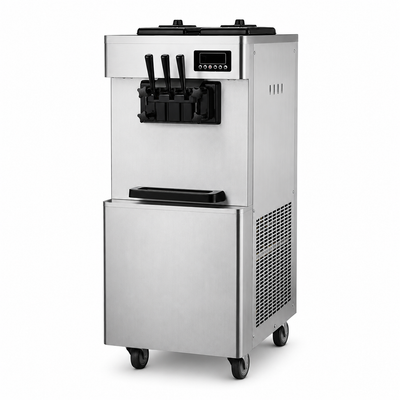
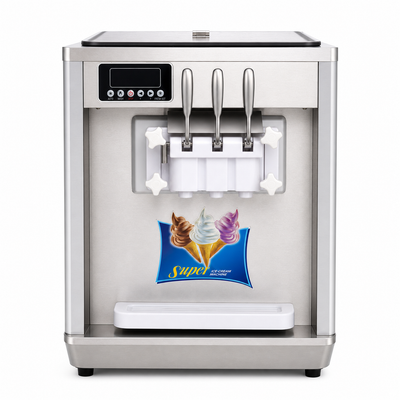
Compare both: soft serve machines and the CB-500 rolled ice cream machine.
What else do you need besides the machine?
A freezer for base, scrapers, a topping station, consumables, and a proper surface for the pan. The surface has to be level — an unlevel pan gives you uneven thickness and torn rolls — ventilated, and rated for the load.
Put a sink within reach. You will be wiping the pan down constantly through service, and a station where the operator has to walk ten feet to rinse a cloth is a station that gets cleaned less often than it should.
Is a rolled ice cream machine hard to clean?
No — it is simpler than a soft serve machine. There are no hoppers, augers or dispense valves to strip down. The only food-contact surfaces are the flat pan and the scrapers, so close-down is a wipe, a wash and a sanitise.
The one rule: never use abrasives on the pan. Scratches hold residue and ruin the surface you need to be perfectly smooth for clean rolls.