TL;DR — Quick Answer
Match capacity to traffic, then choose configuration and build. Output per hour is the one number that decides whether a machine keeps up with your rush.
- Countertop 18–25 L/h: small to medium sites — cafes, dessert shops, food trucks.
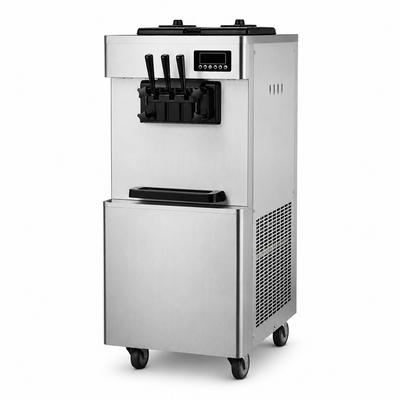
- Floor-standing 35 L/h+: busy malls and large chains.
- Flavour configuration: 2+1 twist (two single flavours plus a centre twist) is the most popular dessert-shop setup.
- Refrigerated hoppers: let you hold unused mix cold overnight, cutting waste and pre-cool time.
- Hopper size: 7 L per flavour line covers most small shops for a full busy shift.
- Price guide: countertop single-head $1,600–$2,500; floor twins $2,500–$4,500; triples and specialty machines $5,000+.
- Bench check: a countertop unit needs a bench that carries the full working weight — often 100+ kg.
- Home or small batch? Compressor machines are the only real option for commercial use.
Note: This guide covers commercial ice cream machines for cafes, dessert shops, food trucks, and restaurants. If you are looking for a home or small-batch ice cream maker, jump to Home & Small-Batch Use below.
Choosing the right ice cream machine starts with understanding your business model, daily volume, and available space. Whether you run a café, dessert shop, food truck, or restaurant, the machine you select directly affects product consistency, labor costs, and customer satisfaction.
1. Match Capacity to Traffic
Output is usually measured in liters per hour or servings per hour. A countertop soft-serve unit rated at 18–25 L/h suits small to medium locations, while high-output floor-standing models at 35 L/h+ are built for busy malls and large chains.
2. Countertop vs. Floor-Standing
Countertop models save floor space and work well where counters can support 100+ kg. Floor-standing models free up counter space and often include larger hoppers and higher output.
3. Flavor Configuration
2+1 twist machines let you serve two single flavors plus a center twist. This is the most popular setup for dessert shops because it maximizes menu variety without adding extra machines.
4. Refrigerated Hoppers Matter
Machines with refrigerated hoppers can keep unused mix cold overnight, reducing daily waste and cleaning cycles. This feature pays back quickly in labor savings.
5. Check Power and Water Requirements
Confirm whether your location has 110V or 220V service, a dedicated circuit, and access to a floor drain or water line if required. Always review the installation manual before ordering.
Need help deciding? Message us on WhatsApp and we will recommend a model based on your location, traffic, and menu.
Frequently Asked Questions
What is the difference between a batch freezer and a soft serve machine?
A batch freezer makes dense, small-batch gelato or premium ice cream that you scoop, with low overrun (10-25%) and a colder serving temperature. A soft serve machine extrudes continuously at warmer temperature with high overrun (50-60%) for a light, airy texture. They serve different menus.
How do I size an ice cream machine for my cafe?
Estimate peak-hour servings, multiply by 1.5 for safety, and pick a machine whose hourly output covers that. A small cafe selling 30 cups an hour at peak needs roughly 40-50 L/h output. Countertop single-head machines cover up to about 80 cups; floor twins cover 150+.
Countertop or floor-standing - which should I choose?
Countertop units save floor space and fit behind a service bar, ideal for cafes selling under 100 cups an hour. Floor-standing units offer larger hoppers, higher output and more flavors for high-volume shops, concessions and chains.
Do I need a built-in pasteurizer?
Built-in pasteurization heats the mix to kill pathogens and holds it safely for several days, reducing daily mix prep. It is valuable for self-serve or unattended setups and is often required by health departments for soft serve. It adds cost and heat-up time but improves food safety.
For Home & Small-Batch Use
This section is for home chefs, small kitchens, and low-volume users considering smaller countertop machines or batch freezers. Commercial cafes should focus on the main guide above.
Investing in a professional ice cream maker is a significant step for any café, dessert shop, or passionate home chef. With so many options on the market—ranging from cheap freezer bowls to heavy-duty commercial batch freezers—making the right choice can feel overwhelming. This guide breaks down the essential factors to consider so you can pick the perfect machine specifications for your specific needs.
1. Built-in Compressor vs. Freezer Bowl
This is the first and most crucial decision you will make. Freezer bowl machines require you to freeze the bowl in your freezer for 18-24 hours before churning. They are budget-friendly but only allow you to make one batch per day. Compressor machines have a built-in refrigeration system that freezes the bowl as it churns. They require no pre-freezing and allow you to make batch after batch continuously.
"For any commercial environment, a compressor-driven machine is non-negotiable. It is the difference between serving customers on demand and running out of stock on a hot afternoon."
2. Production Capacity and Output Speed
When comparing compressor machines, look at two key metrics: Bowl Capacity (how much base it holds per batch, usually measured in liters) and Hourly Output (how many liters of finished product it can produce in one hour). For example:
- Compact Countertop Makers: 1.5 to 2.0-liter capacity, producing about 3-4 liters per hour. Perfect for home kitchens, testing labs, or low-volume restaurants.
- Commercial Batch Freezers: 3.5 to 15-liter capacity, producing 15 to 45 liters per hour. Essential for gelaterias, busy cafes, and high-volume catering businesses.
3. Churn Speed and Overrun Control
Overrun refers to the amount of air incorporated into the ice cream during churning. High overrun (50-100%) makes ice cream light, fluffy, and economical. Low overrun (15-30%) makes gelato dense, rich, and intensely flavored. Look for machines with adjustable churn speeds and high-torque motors that can handle low-overrun, dense bases without straining.
4. Ease of Cleaning
Sanitation is paramount in food service. A machine that is difficult to clean will cost you hours of labor every week. Look for models with removable churn bowls, detachable paddle assemblies, and built-in wash cycles or drainage outlets that allow you to flush out the cylinder easily.
Frequently Asked Questions
What is the best ice cream maker for a small cafe?
A countertop single-head or small twin soft serve machine around 18-25 L/h output is usually the sweet spot for cafes doing under 100 servings an hour. Look for air-cooled condenser, gravity drain and a built-in hopper to keep things simple.
Should I choose air-cooled or water-cooled?
Air-cooled is the default for most indoor installations: lower install cost, no water consumption. Water-cooled runs more quietly and produces more ice per kWh in hot environments, but consumes water and needs a drain.
How important is hopper capacity?
Hopper capacity determines how long you can run before refilling mix. A 7L hopper on each flavor line gives most small shops an entire busy shift. Larger hoppers reduce refill trips but require more cold storage and longer pre-cool.
What is a fair price for a commercial ice cream maker?
Countertop single-head units typically range from $1,600 to $2,500, floor twins from $2,500 to $4,500, and high-capacity triples or specialty machines from $5,000 upward. Beware of unrealistic ROI claims; honest specs and warranty matter more than headline price.