TL;DR — Quick Answer
Soft serve, hard ice cream and gelato are three different products requiring three different machines. Pick by menu positioning, not by machine price.
- Soft serve: 40–60% overrun, served at –6 to –8 °C, made in a continuous freezer. Fastest service, lowest labour per serving.
- Hard ice cream: 20–35% overrun, stored at –18 to –20 °C, made in a batch freezer then hardened. Denser bite, higher ticket price.
- Gelato: 10–25% overrun (the lowest), served at –10 to –14 °C. Richest mouthfeel, needs a batch freezer plus a display case.
- Cost: soft serve $1,600–$3,000; hard ice cream batch freezers start around $3,000.
- Key warning: you cannot make gelato in a soft serve machine — the fat, sugar and air ratios are different.
Soft serve, hard ice cream and gelato are three distinct products, and each needs a different machine. Choosing the wrong equipment leads to texture problems, slow service, wasted product and frustrated customers. This guide compares the three formats across texture, temperature, equipment cost and service speed so you can pick the right machine for your menu.
What is soft serve?
Soft serve is a frozen dairy product dispensed directly from a freezer barrel at a semi-soft consistency. It contains 40–60% air, known as overrun, which gives it a light, fluffy texture. It is served in cones, cups and sundaes at temperatures between -6 and -8 °C. A commercial soft serve machine freezes, aerates and dispenses in one continuous process, making it ideal for fast service.
What is hard ice cream?
Hard ice cream is fully frozen to a scoopable consistency and stored in a display freezer at -18 to -20 °C. It is produced in a batch freezer and then hardened in a blast freezer or cabinet. Hard ice cream has lower overrun than soft serve, typically 20–35%, giving it a denser bite. It is served with scoops into cones, cups or take-home pints.
What is gelato?
Gelato is similar to hard ice cream but churned more slowly and served at a slightly warmer temperature, usually -10 to -14 °C. It has the lowest overrun of the three, around 10–25%, which gives it a richer, creamier mouthfeel. Authentic gelato requires a batch freezer and a dedicated display case, not a soft serve machine.
Side-by-side comparison
| Factor | Soft Serve | Hard Ice Cream | Gelato |
|---|---|---|---|
| Air content (overrun) | 40–60% | 20–35% | 10–25% |
| Serving temperature | -6 to -8 °C | -18 to -20 °C | -10 to -14 °C |
| Machine type | Continuous freezer/dispenser | Batch freezer + hardening cabinet | Batch freezer + display case |
| Service speed | Very fast | Moderate | Moderate |
| Labour per serving | Low | Medium | Medium |
| Menu flexibility | Limited flavours, instant serve | Many flavours, pre-scooped | Many artisan flavours |
| Best business model | Fast food, cinemas, cafes | Parlours, retail pints | Artisan dessert shops |
When soft serve is the right choice
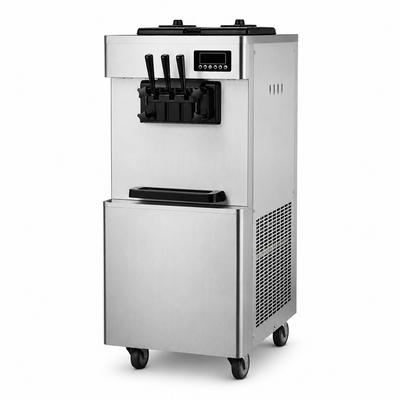
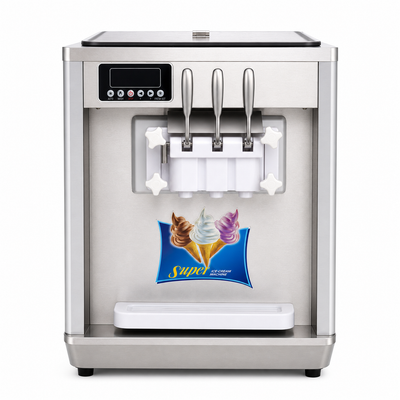
Choose soft serve when speed, low labour and small footprint matter more than having dozens of flavours. A commercial soft serve machine dispenses a finished product in seconds, so it works well in fast-casual restaurants, cinemas, food trucks and buffet stations. A countertop unit like the Axospro BQL-808-1 fits small kitchens and produces 18–25 L/h. For higher traffic, the Axospro BQL-A22-1 provides the same flavour flexibility in a floor-standing frame.
When hard ice cream or gelato is the right choice
Choose hard ice cream when you want to display a wide flavour selection in a dipping cabinet, sell pre-packed pints or offer premium scooped desserts. Choose gelato when your brand centres on artisan, high-density, lower-air desserts. Both require more equipment, more labour per serving and more storage space than soft serve.
Equipment and operating cost comparison
Entry-level commercial soft serve machines start around $1,600. A countertop unit can serve hundreds of portions per day with minimal labour. Hard ice cream batch freezers and gelato equipment start above $3,000, plus display freezers, blast freezers and dipping cabinets. Operating labour is also higher because each portion must be scooped by hand.
From a return-on-investment perspective, soft serve usually pays back fastest because of low labour and high throughput. A $1,600 machine selling 60 portions per day at a $2.50 margin recovers its cost in under two weeks.
Can one machine do it all?
No. The three products require different freezing temperatures, overrun levels and serving methods. A soft serve machine cannot make hard ice cream or gelato. A batch freezer cannot dispense soft serve. Some all-in-one machines exist, but they are compromises that rarely excel at any single format.
Energy use and operating environment
Soft serve machines draw 1.5–2.0 kW during active freezing and less during standby. Hard ice cream batch freezers use more power per cycle but run fewer hours per day. Gelato display cases run continuously to maintain serving temperature. In hot climates, budget extra cooling capacity and ventilation for any frozen dessert equipment.
Staff training and daily workflow
Soft serve requires the least training: staff fill hoppers, pull levers and follow a daily cleaning checklist. Hard ice cream and gelato need scooping technique, display case management and careful temperature monitoring. If you have high staff turnover, soft serve is usually the easier format to operate consistently.
Texture science: why overrun matters
Overrun is the amount of air whipped into the frozen product. Soft serve at 50% overrun feels light and creamy. Hard ice cream at 25% overrun feels denser and richer. Gelato at 15% overrun feels intensely flavoured. The same base mix tastes different depending on overrun and serving temperature, which is why each format needs its own equipment.
Menu pairing ideas by format
Soft serve pairs well with cones, cups, sundaes and blended shakes. Hard ice cream works in scooped cones, milkshakes, ice cream cakes and take-home pints. Gelato is best served in small cups or cones with premium toppings. Choose your equipment based on the menu you want to build, not just the product you like.
Customer perception and pricing power
Soft serve is perceived as fast, fun and affordable, making it ideal for impulse sales. Hard ice cream and gelato command higher prices because customers associate them with artisan quality. If your location relies on foot traffic and quick turnover, soft serve will likely generate more total revenue. If your brand is built on premium dessert experiences, hard ice cream or gelato supports higher margins per serving. Test small batches before committing to a full format.
Storage and holding requirements
Soft serve requires no storage freezer because product is served immediately. Hard ice cream needs a hardening cabinet and display freezer. Gelato needs a display case that holds -10 to -14 °C. These storage requirements add floor space, electricity and capital cost to hard ice cream and gelato operations.
Seasonal demand patterns
Soft serve peaks in summer but can drive impulse sales year-round in warm climates and indoor venues. Hard ice cream and gelato also peak in warm months but rely more on destination traffic. If your location has strong winter traffic, soft serve paired with hot drinks often outperforms a dedicated hard ice cream setup. Consider local weather patterns and foot traffic sources before locking into a format. A year-round menu often benefits from soft serve flexibility.
Final recommendation
If your business model is fast service with limited space and a small team, a commercial soft serve machine is the right choice. For a premium parlour with many flavours, artisan presentation and higher price points, invest in hard ice cream or gelato equipment.
Frequently asked questions
Can one machine make both soft serve and hard ice cream?
No. The two products require different freezing and serving temperatures. Soft serve machines dispense product at -6 to -8 °C, while hard ice cream is served at -18 °C.
Is gelato made in a soft serve machine?
No. Gelato is made in a batch freezer and served from a display case at a warmer temperature. Soft serve machines cannot produce gelato texture.
Which is more profitable, soft serve or hard ice cream?
Soft serve usually has lower labour and equipment costs per serving, making it more profitable for high-volume locations. Hard ice cream and gelato command higher prices but require more labour and storage space.
How much does a commercial soft serve machine cost?
Commercial soft serve machines range from $1,600 for countertop models to $3,000 and above for floor-standing multi-head units.
Do I need training to operate a soft serve machine?
Basic operation is straightforward. Most operators learn cleaning, refill and troubleshooting within one day using the included manual and Axospro support.
Can I make soft serve from gelato mix?
No. The formulations have different fat, sugar and air ratios. Use the mix designed for your machine type.
Related reading
Related reading from the AXOSPRO blog
- Soft Serve Machine Daily Opening & Closing Procedure (SOP)
- Soft Serve Machine Water Cooling vs Air Cooling: Which to Choose
- Where to Place a Commercial Soft Serve Machine: Ventilation, Noise & Clearance
- Slush Machine Daily Cleaning & Syrup Rotation SOP
- Soft Serve vs Frozen Yogurt: Can One Machine Do Both?